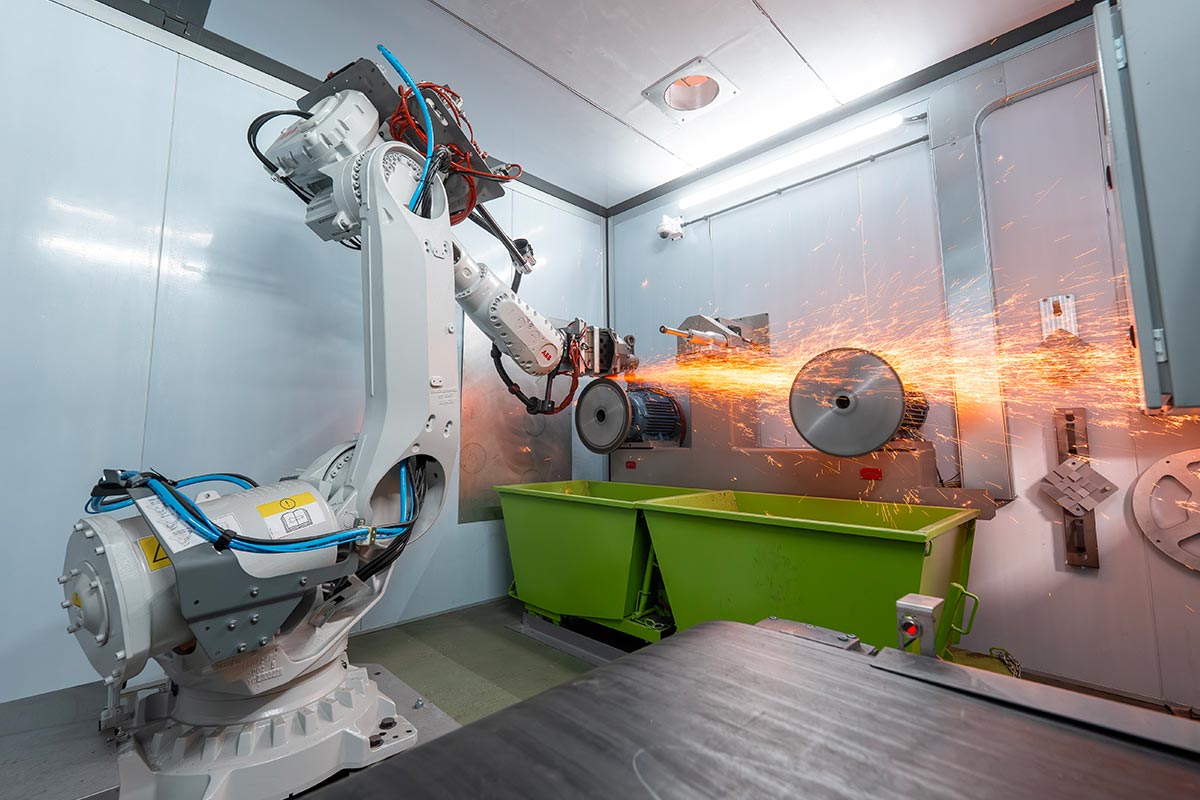
For over a decade, “Industry 4.0” has been a buzzword in manufacturing circles. Smart factories, digital twins, IIoT, predictive AI. The vocabulary is everywhere, and frankly, it has become somewhat ambiguous. But strip away the marketing jargon, and what is actually happening on the production floor ?
At SiiF, we have been designing and integrating industrial automation and robotics solutions for years. Here is our perspective: the Fourth Industrial Revolution isn’t won in PowerPoint presentations. It is won through data transmitted from an inline robot, a sensor that identifies a potential failure three weeks in advance, and a production cell that self-adjusts to process variations in real time.
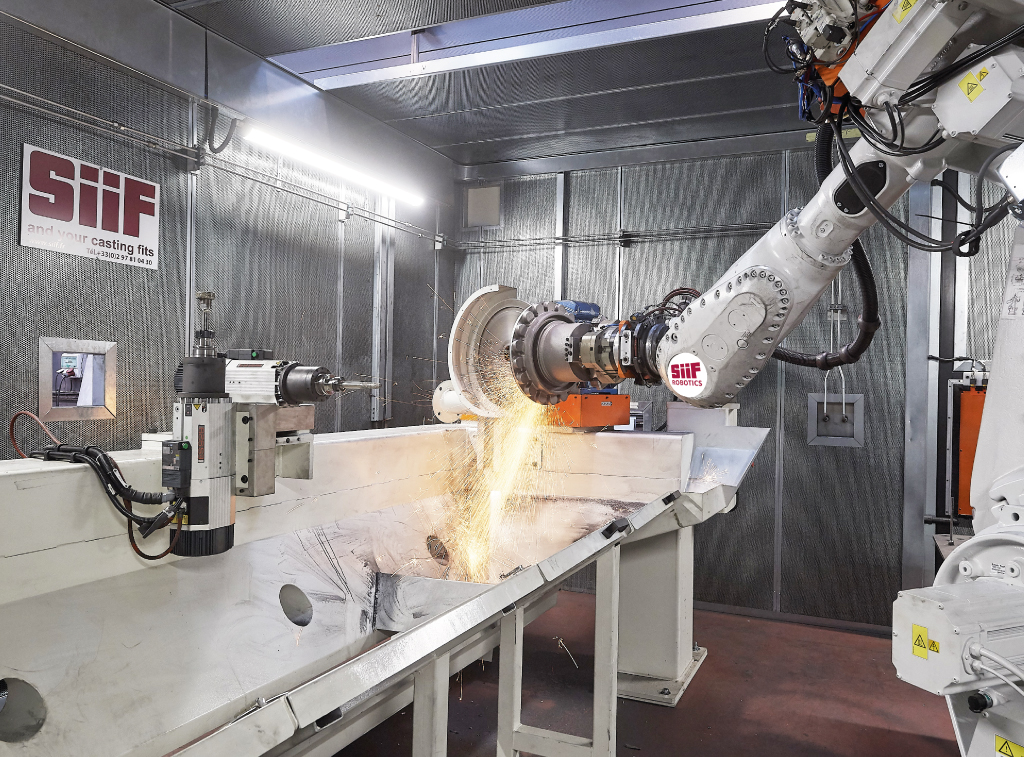
On modern production lines, every robot is a source of actionable, real-time data
This article cuts through the noise to explain what Industry 4.0 really is, the core technologies driving it, and the tangible ROI industrial manufacturers are already seeing, regardless of their sector.
What is Industry 4.0, really ?
Industry 4.0 represents the fourth industrial revolution, following mechanization (1st), electricity and mass production (2nd), and electronic/IT-based automation (3rd). The game-changer this time is connectivity. We are no longer just automating a machine; we are integrating it. We collect data, analyze it, and use those insights to manage production in real time – and to anticipate future needs.
In a modern facility, this means industrial robots that communicate performance metrics, vision systems that verify every part and log deviations, and supervisory software that provides a comprehensive, station-by-station overview of the entire line.
The Four Pillars of the Connected Factory
Industry 4.0 is built on four core components that function as a cohesive system :
- Interconnectivity : Machines, sensors, and information systems communicate via the Industrial Internet of Things (IIoT)
- Data Transparency : Raw data is transformed into actionable intelligence, visible to teams in real time
- Technical Assistance : Systems support operators in decision-making or take over dangerous, repetitive, or physically demanding tasks
- Decentralized Decision-Making: Cyber-physical systems can make automated adjustments without requiring constant humain intervention
Why Industry 4.0 is essential across all sectors
Automotive, aerospace, food & beverage, logistics, metallurgy, pharmaceuticals – no industrial sector is immune to this transformation. While challenges vary by industry, the drivers remain the same :
- Reducing workplace strain and physical toll
- Meeting increasingly stringent quality traceability requirements
- Managing hugh product variability
- Constant pressure to optimize costs and lead times
Connected robotics does not replace the expertise of your team; it amplifies it. It offloads repetitive tasks and physical strain while empowering operators with advanced management tools they simply did not have before.
Adressing industrial challenges with concrete solutions
Manufacturers today face a perfect storm: labor shortages in physically demanding roles, rising environmental standards, margin pressure, and the need to remain competitive against highly equipped international rivals.
Industry 4.0 isn’t a magic wand, but it provides the necessary leverage: reduced scrap through automated quality control, fewer unplanned line stoppages via predictive maintenance, and more attractive, ergonomic workstations.
Looking to assess the digitalization potential of your production line? Talk to a SiiF expert.
Key technologies driving the 4.0 transformation
Connected robotics
Robotics is not new. What changes with Industry 4.0 is that the robot is no longer an isolated unit; it is a date source. A connected robot can signal tool wear before failure occurs, adjust its pathing based on the actual geometry of a part detected via vision, and transmit production cycles to a centralized monitoring system.
Digital twins
A digital twin is a virtual replica of a production line or robotic cell. It allows you to simulate new processes before touching the physical equipment. You can test production scenarios and train teams in a virtual environment without downtime. For any manufacturer integrating a new product reference, this is a massive gain in speed and risk mitigation.
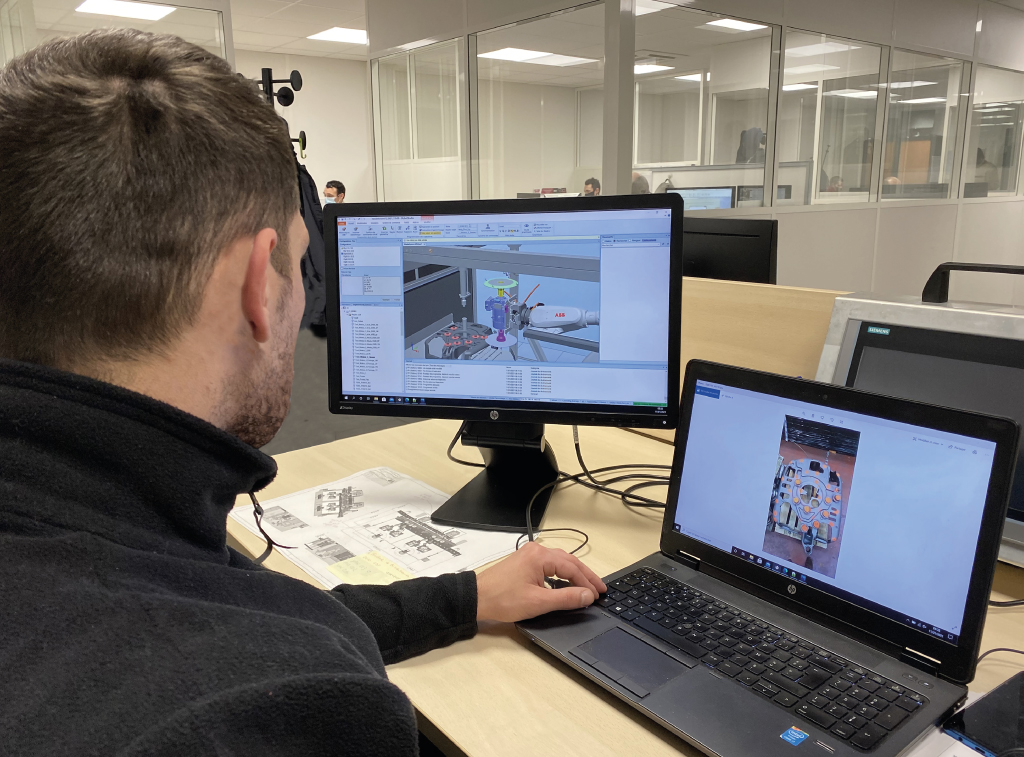
A digital twin allows for testing new processes before making any physical changes to the actual production line
Predictive maintenance
Rather than replacing wear parts on a fixed schedule – or waiting for a breakdown – onboard sensors (vibration, temperature, cycle counts) allow you to anticipate failures before they happen. The result : reduced unplanned downtime, optimized machine lifespan, and better control over maintenance costs.
Machine vision and automated quality control
AI-integrated vision systems detect defects with a consistency that manual inspection cannot match. These systems also feed valuable databases to identify the root causes of quality issues upstream in the process.
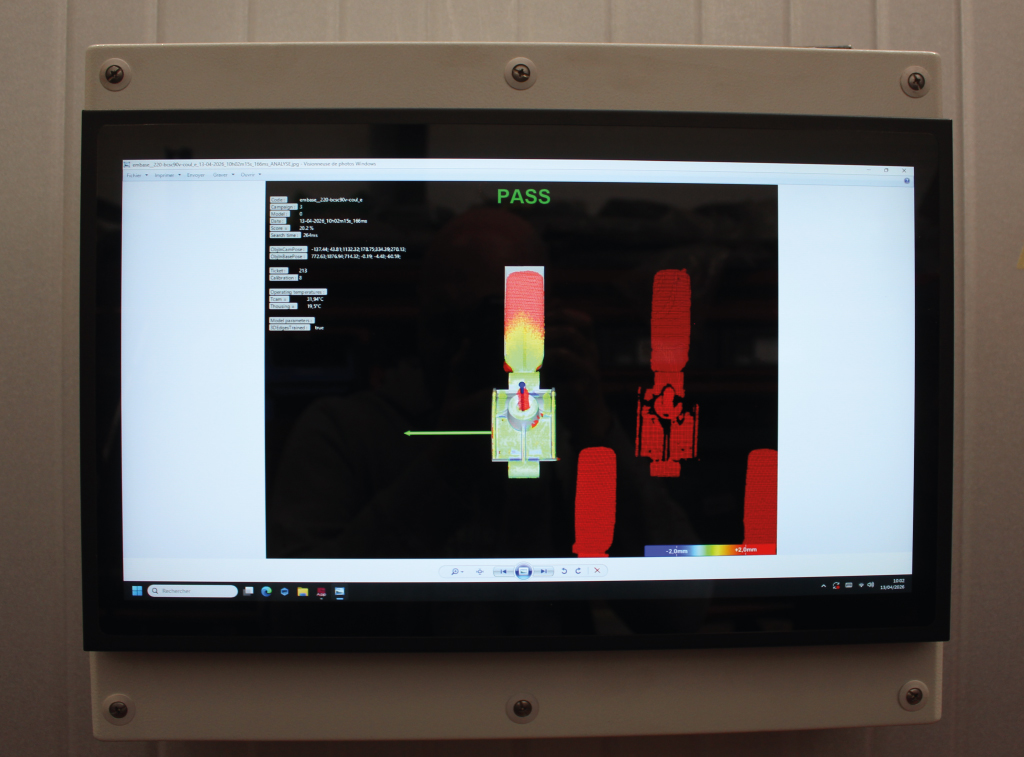
Machine vision detects defects with a level of consistency that manual visual inspection cannot guarantee continuously
Centralized data management (MES / Supervision)
An MES (Manufacturing Execution System) or line supervision software aggregates data from every station. This provides a global view of Overall Equipment Effectiveness (OEE), throughput, and bottlenecks across the entire manufacturing chain.
Tangible benefits for manufacturers
Industry 4.0 only makes sense if it drives measurable results. The most common field-proven benefits include:
- Reduced scrap and non-quality: Systematic inspection and end-to-end traceability for every product
- Minimized unplanned downtime: Driven by predictive maintenance
- Improved workplace safety: Moving operators away from the most repetitive, noisy, or physically taxing tasks
- Industrial flexibility: Lines that adapt faster to new product references
- Quality traceability: An essential requirement for high-stakes supply chain (automotive, aerospace, pharma)
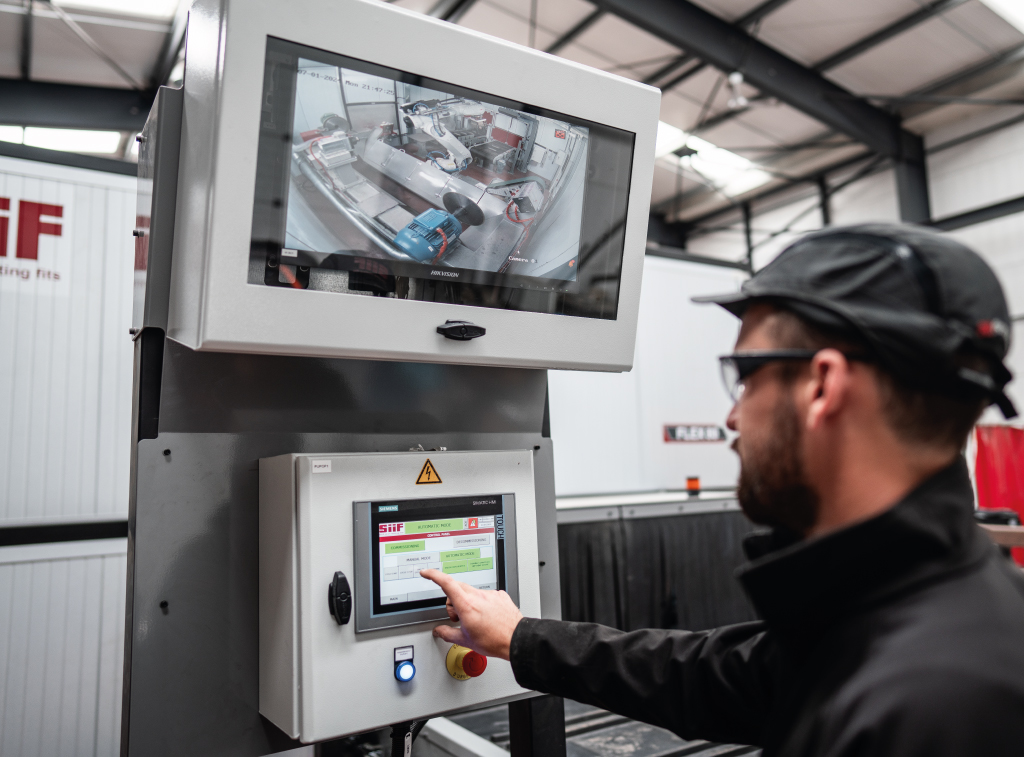
Digitalization doesn’t replace teams; it provides them with management tools they didn’t have before
Real-world obstacles
It would be misleading to call this transition “easy”. Manufacturers we support often face three common hurdles:
- Initial investment: Especially for SMEs, we recommend a phased approach rather than an overnight total transformation
- Cybersecurity: As soon as machines are networked, industrial cybersecurity becomes a non-negotiable priority
- Change management: This is often underestimated; A connected line is useless if the operators aren’t trained to interpret and act on the data it produces
Where to start ?
The good news is that Industry 4.0 is not an “all-or-nothing” proposition. Successful manufacturers move in stages:
- Map the current state: Identify the most critical bottlenecks in terms of ergonomics, scrap rates, or downtime
- Run a pilot: Automate or connect one specific station to measure ROI before scaling
- Train the team: Parallel to technical integration, ensure staff are equipped to use the data
- Scale progressively: Gradually extend connectivity and data centralization to the rest of the line
Need help with a robotics or modernizatin project? SiiF designs and installs custom robotic cells, from concept to staff training. Start a project with SiiF.
FAQ: Industry 4.0
What is Industry 4.0 in one sentence ?
It is the integration of machines, sensors, and IT systems to collect and utilize real-time data to control, automate, and anticipate production.
Is Industry 4.0 only for large corporations ?
No. Most SMEs start with a pilot station, prove the ROI, and scale up incrementally.
What are the biggest barriers to entry ?
Capital investment, cybersecurity concerns, and – most importantly – the human factor and change management.
What is the best way to start ?
Identify your most “painful” station (high scrap or physical strain), launch a pilot project to capture measurable data, and invest in team training from day one.
The bottom line
Industry 4.0 is not an abstract concept; it is a measurable transformation that directly impacts your robotics, maintenance, and product quality. It does not replace the traditional know-how of your teams; it gives them the tools to go further. The result is a safer workplace, more stable production, and superior competitiveness in an increasingly demanding market.
At SiiF, we live this transformation every day, supporting manufacturers in designing robotic cells and training the teams that operate them.